Booking a private room at a restaurant feels like it should be simple: pick a date, pick a menu, show up. The parties that go smoothly are the ones where the host made five decisions early and in the right order. The parties that wobble almost always skipped the first one. Whether it is a rehearsal dinner, a retirement, or a company event in Statesville, the sequence below is how restaurant banquet rooms actually work from the inside.
The five decisions, in order
- Fix the headcount range. Give the restaurant a realistic low and high number. Banquet pricing and room choice both hang on it.
- Choose the room by fit, not hope. A room that seats 35 feels full at 28 and crowded at 38. Match the room to the middle of your range.
- Set the menu shape. Decide family style versus plated, and pick two or three mains rather than the full menu. Limited menus keep a party's food arriving together.
- Confirm the bar and timing plan. If the room has its own bar, agree on when it opens and what it serves. Put speeches and cake between courses, not during them.
- Reconfirm a week out. Final count, arrival time, and any dietary needs. One call prevents nearly every party-day surprise.
Headcount comes first because everything else prices off it. Restaurants that host parties regularly, with rooms of different sizes, will steer you to the right space if your numbers are honest. A private room that seats 35 and a larger room seating 20 to 40 with its own bar are different tools. The smaller room gives a dinner of 30 an intimate feel. The bigger combination, especially when it can open onto a terrace, suits a reception where people move around.
Menus for groups are a timing problem
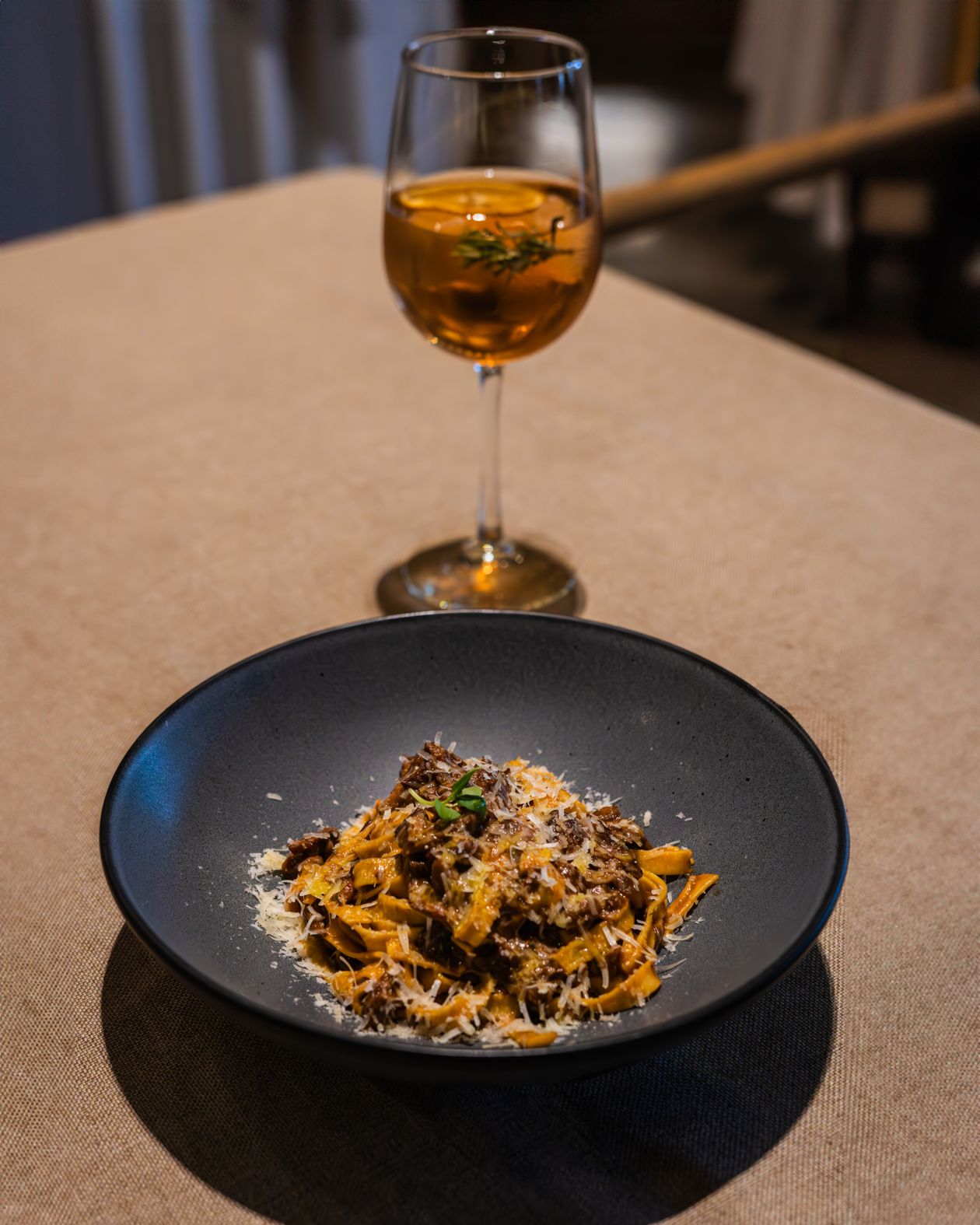
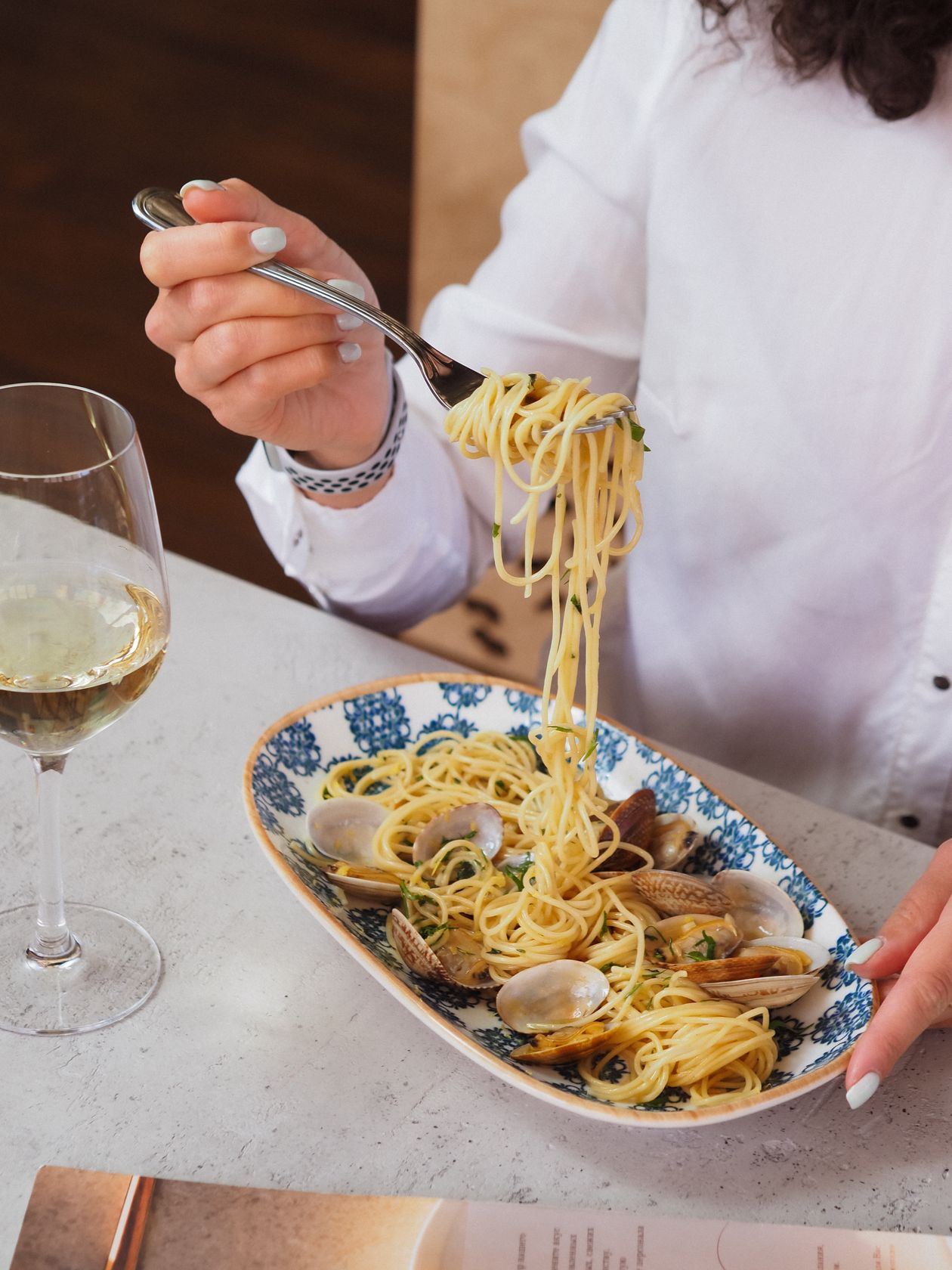
A kitchen serving forty people at once cannot cook forty different dishes to order without the table eating in shifts. That is why party menus are limited, and why you should not fight the limitation. Two or three mains, one of them a crowd-safe choice like chicken marsala and one a house specialty, come out of the kitchen in waves that land together. Family style service, big plates of pasta and salad shared down the table, is even more forgiving on timing and suits the food: Italian cooking was built for the middle of the table.
Ask about courses, too. A salad course buys the kitchen time to fire mains, and a set dessert ends the meal cleanly instead of with twelve separate checks and decisions.
The details hosts forget
Arrival staggering matters. If all forty guests walk in at 6:30, the bar and the kitchen spike at once. A thirty minute window smooths everything. Dietary needs should be collected with RSVPs, not discovered at the table, because a kitchen can handle a gluten free or vegetarian plate gracefully with notice and awkwardly without it.
And put one person in charge on the night. The host should be enjoying the party. A designated cousin or colleague who knows the timeline, when the toast happens, when the cake comes out, keeps the evening moving without the host checking a phone every ten minutes.
What good hosts do that nobody notices
The best hosted parties share a few invisible habits. The host arrives thirty minutes early, walks the room, and confirms the timeline with one named staff contact rather than whoever is nearest. The host seats people deliberately, mixing the talkative with the quiet, instead of letting forty guests sort themselves into the same six conversations they always have. And the host builds in one small moment, a toast, a cake, a two minute speech, that gives the evening a center. Without it, even a good party can feel like dinner that simply got large.
Budget conversations go better with one honest principle: spend on the food and the room, economize on everything else. Guests remember what they ate, whether the room fit, and whether the evening flowed. They do not remember favors, printed menus, or elaborate decorations. A host who puts the money into the kitchen's strengths and the right sized room will be thanked for exactly the things that mattered, which is the whole point of giving the party in the first place.
Common questions
How far ahead should I book a restaurant banquet room?
For weekend dates in popular months, several weeks to a few months is normal. Weekday events can often be arranged much sooner. Book the room first and refine details later.
Why are party menus limited?
Timing. A kitchen can serve forty people the same three dishes together, but not forty different dishes. Limited menus are how a group eats at the same time.
What size room should I choose?
One that fits the middle of your expected range comfortably. A room seating 35 suits the high twenties to mid thirties. Much smaller feels empty, much larger means crowding.
Photos in this guide are representative stock images.
← All guides from Mezzaluna II← Back to Mezzaluna II